Novembre 2023 - Day Planning, Activities, School Follow Up, Profession Choice, Life Cycle
Day Planning, Activities, School Follow Up, Profession Choice, Life Cycle
EN (English)
Day Planning
1. Morning Preparation and Breakfast - Wake-up (6:00-7:00-8:00) (breakfast, etc.)
2. Morning (8:00-12:30): morning 1 - morning break - morning 2 (various activities)
3. Noon Lunch (12:30-14:00) (lunch, etc.)
4. Afternoon (14:00-17:30): afternoon 1 - afternoon break - afternoon 2 (various activities)
5. End of the day (17:30-19:00) (pick up the kids, shower, homeworks)
7. Evening (20:00-21:00) (various activities : manual or intellectual, homeworks)
8. Sleeping Preparation (21:00-22:00-23:00) (brushing teeth, reading, etc.)
Possible hours (1h to 2h) : 6am-7am or 5am-6am-7am
Activities
1. Various learning (school, training, etc.)2. Learning support (school support, etc.)
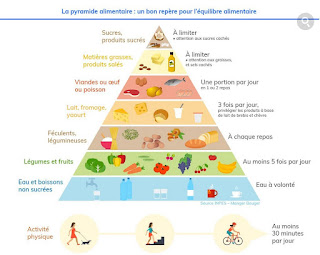
3. Eat for your health (balanced diet, weekly planning)
4. Move for your health (sport, good habits/lifestyle, weekly planning)
5. Body care and Hair care (care, hairstyles, holiday planning)
6. Games, Board/Video games, Online games
7. Reading, Writing, Speaking/Discussion, Music, Songs, Cinema, Dance
8. Learning a second or third language
9. Washing-up, Laundry, Cleaning (weekly planning)
10. Taking care of your environment (House, Garden, holiday planning)
11. House Project, Family life, Professional life
12. Other Project
==
House Care and Weekly Activities
==
Learnings from around 10 years old until around 16 years old or more .
==
Washing dishes / Washing-up: Every day. After Meal (or at Noon and at Evening).
Grocery Shopping : 2 times per week.
Cooking: Every 2 or 3 days.
Cleaning House. Laundry. Ironing. : 1 or 2 times per week.
Stretching and/or Sport : 2 times per week.
Hair Care : Every 2 weeks.
Gardening: If Needed.
==
- Monday: Cooking.
- Tuesday: Gym/Yoga/Pilates. Grocery Shopping.
- Wednesday: Cleaning the House (Spider nets, dust, vacuum or mop). Bed Sheets Change. Laundry. Ironing. Cooking.
- Thursday: Gym/Yoga/Pilates. Grocery Shopping.
- Friday: Cooking.
- Saturday: Hair Care or Gardening.
- Sunday: Same As Wednesday If Needed.
==
School Follow up of children
School is the best way to ensure inter-generational transmission of knowledges. Without school, most knowledges would disappear. School has always existed in traditional societies. It is its form that has evolved and its contents too. Thanks to its evolution, school has been extended to more people with time.
School as it is now is not perfect and needs to be improved on various aspects to ensure more equity : gateways between fields (technical, science, litterature), statistics on employment by field, trainings for wage labor and entrepreneurship, developpement of fields in sports and arts, etc.
==
School Curriculum or School Programs --
France
School Curriculum/Programs (online) https://eduscol.education.fr
https://www.education.gouv.fr/programmes-scolaires-41483
School Books (online)
https://www.lelivrescolaire.fr/ https://www.decitre.fr/
--
UK
School Curriculum/Programs (online) https://www.gov.uk/national-curriculum https://www.gov.uk/government/collections/national-curriculum
Books https://get-help-buying-for-schools.education.gov.uk/categories/office-education-supplies/print-books https://www.espo.org/print-books-376e2-24.html
--
France - University https://www.parcoursup.gouv.fr/ https://www.campusfrance.org/fr Ambassy
UK - University https://www.ucas.com https://www.gov.uk/higher-education-courses-find-and-apply https://study-uk.britishcouncil.org/ Ambassy
USA - University https://www.commonapp.org Ambassy ==
Subjects Preparation by parents - Children Supervision : current class + 2 to 3 next classes.
Prepare the main subjects (Mathematics ; French or English or Philosophy), as well as 2 or 3 other subjects that you want to focus on. When the child is in kindergarten, start preparing gradually the 3 first classes of primary school and continue like that until end of high school. End middle school (Cycle Brevet) : French, English, Mathematics, Physics-Chemistry, Sciences of Life and Earth (Biology and Environment), Sciences of Numeric and Technology (SNT).
End high school (Cycle Bac) : Specialties Subjects (2 to 3), French, English, Philosophy
==
Structure and Numbering of classes : France (FR) vs Royaume-Uni/United Kingdom (UK)
Note. Most african countries follow these structures due to historical links between these countries and Africa. The school subjects programs are also very similar.
Note. The harmonisation of education programs in the world till 18 years old is an interresting discussion to have. The harmonisation would mean a high similarity but not programs that are identical for it is important to allow space for cultural specificity of each nation.
== Garderie d'enfants = Child care
FR - 0 à 2 ans : crèche ; (halte-)garderie d'enfants
UK - 0 to 2 years old (yo) : nursery school = crèche ; child care / day care = (halte-)garderie d'enfants
2 to 3 years old (yo) : pre-kindergarden = pré-maternelle = halte-garderie
== Ecole maternelle / Kindergarten
School is mandatory in France from the age of 3 years old which corresponds to September of the year the child is celebrating 3 years old.
FR - 3 à 5 ans : école maternelle = jardin d'enfants - Cycle 1 3 ans : PS = Petite Section 4 ans : MS = Moyenne Section 5 ans : GS = Grande Section
School is mandatory in the UK from the age of 4 years old which corresponds to September of the year the child is celebrating 4 years old.
UK - 4 to 5 years old (yo) : kindergarden = école maternelle - Key Stage 1 4 yo : P1/Reception 5 yo : P2/Year1
In many other countries, school is mandatory from the age of 6 years old (usa, spain, germany, etc.). From 0 to 6 years old there are only private and/or paying structures.
== Ecole Primaire / Primary School (P)
FR - 6 à 10 ans : Ecole primaire - Cycle 2 et 3 6 ans : CP = Cours Préparatoire 7 ans : CE1 = Cours Élémentaires 1 8 ans : CE2 = Cours Élémentaires 2 9 ans : CM1 = Cours Moyen 1 10 ans : CM2 = Cours Moyen 2
UK - 6 to 10 years old : Primary school (P) - Key Stage 2 6 yo : P3/year2 7 yo : P4/year3 8 yo : P5/year4 9 yo : P6/year5 10 yo : P7/year6
== Ecole Secondaire / Secondary School (S)
FR - 11 à 17 ans : Ecole Secondaire (collège ; lycée)
Collège - Cycle 3 et 4 : 11 ans : 6e, 12 ans : 5e, 13 ans : 4e, 14 ans : 3e (Examen national, Brevet) .
Lycée : 15 ans : Seconde = 2e, 16 ans : Première = 1er (Examen national, Baccalauréat niveau première), 17 ans : Terminale=Tle (Examen national, Baccalauréat niveau terminale).
UK - 11 to 17 years old : Secondary school (S) (middle school = collège ; high school = lycée)
Middle School / Junior High School - Key Stage 4: 11 yo : S1/year7/first form, 12 yo : S2/year8/second form, 13 yo : S3/year9/third form, 14 yo : S4/year10/fourth form .
High School : 15 yo : S5/year11/fifth form (National exam, General Certificate of Secondary Education GCSE Ordinary Level), 16 yo : S6/year12/lower sixth, 17 yo : S7/year13/upper sixth (National exam, GCSE Advanced Level) .
== Enseignement Supérieur / Higher Education
18+ : Higher éducation = Enseignement supérieur = Universités
FR - LMD = Licence, Master, Doctorat
UK - BMD : Bachelor, Master, PHD/Doctorate
====
--
France
https://www.education.gouv.fr/programmes-scolaires-41483
School Books (online)
https://www.lelivrescolaire.fr/ https://www.decitre.fr/
==
School Subjects, School Week Planning, Vacation Week Planning, Erasmus+
==
==
1. French (audio-video-discussion, ComprehensionOrale, ExpressionOrale, lecture-grammaire-conjugaison-dictée-rédaction, ComprehensionEcrite , ExpressionEcrite)
2. English (audio-video-discussion, Listening, Speaking, reading-grammar-tenses-dictation-writing, ReadingComprehension, Writing)
==
3. Mathematics (lessons, exercises)
4. Physics-Chemistry (lessons, exercises)
==
5. Science of Life and Earth (Biology and Environment = SVT)
6. Science of Numeric and Technology (SNT)
==
8. History-Geography-EMC (Education of Moral and Civic)
9. Spanish / German / Other Languages
Planning for Class Week
Monday (2h) : History-Geography-EMC, Spanish / German / Other Languages
Tuesday (2h) : Mathematics / Physics-Chemistry (lessons, exercises), French
Wednesday (2h) : SVT/SNT/SES (lessons, exercises), English
Thursday (2h) : Mathematics / Physics-Chemistry (lessons, exercises), French
Friday : Checking/Evaluation + Re-Planning
Saturday morning (3h) : French / English
Saturday afternoon (3h) : French / English
Sunday morning (3h): Mathematics/Physics-Chemistry/SVT/SNT/SES (lessons, exercises)
Planning for Vacation/Holiday Week (AllSaints-Christmas-Winter-Easter) (November-December-February-April)
Monday (6h): Mathematics / Physics-Chemistry (lessons, exercises)
Tuesday (6h): Mathematics / Physics-Chemistry (lessons, exercises)
Wednesday (6h): SVT / SNT / SES
Thursday (6h): French / English
(audio-video-discussion, Listening, Speaking, reading-grammar-tenses-dictation-writing, ReadingComprehension, Writing)
Friday :
Saturday :
Sunday :
==
Planning for Summer Vacation (July-August)
French :
Revision homophones/confusions (a/as/à, ai/es/est/aie, ce/se/ceux, ces/s'est/c'est, etc.) + 1 dictation.
Revision simple tenses, composite/compound tenses, past participles, tenses value + 1 dictation.
1 text with questions on grammar and comprehension
1 essay writing (imagination subject) : general plan + writing
1 text commentary : general plan and detailed plan + writing
1 dissertation : general plan and detailed plan + writing
Includes countries outside EU (European Union) like : UK, Switzerland, USA, Canada, etc.
https://erasmus-plus.ec.europa.eu/fr/programme-guide/part-a/eligible-countries
https://erasmus-plus.ec.europa.eu/fr/opportunities/opportunities-for-individuals
See also Erasmus Mundus (master and phd level)
https://erasmus-plus.ec.europa.eu/fr/opportunities/opportunities-for-individuals/students/erasmus-mundus-joint-masters
Working Modes to combine
School: Teacher and group of learners/students
Personal Work
Work with parents/family and/or tutors
Work in group with classmates/colleagues
Life Cycle
1. Family Development, Various Learnings : hygiene, house-garden maintenance, cooking, planning, activities, financial management, emotions handling, human relationship management
Childhood (10)
0-5 years old
5-10 years old
Teenage years (8)
10-15 years old
2. Individual and Family Development, Learning, Training,
Planning, Activities, Profession/Job, Family, House and Projects
Young Adult
18-25 years old (7)
Adult
25-45 years old (20)
Senior
45-65 years old (20)
3. Retirement, Family, Activities
Retired
65-75 years old (10)
75-85 years old (10)

Commentaires
Enregistrer un commentaire